

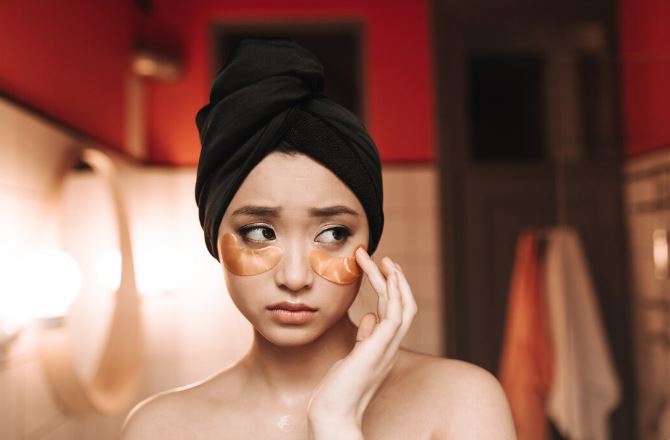
Even the tiniest dark spot on your cheekbone can appear to be the only thing in the room when you stand in front of a bathroom mirror in the bright morning light. It is present. It’s visible to you. After that, it becomes hard to look at anything else in a way that is nearly impossible to describe to someone who has never experienced it. The true tale of skin pigmentation starts at that moment, which is quiet, private, and strangely absorbing. Not within the dermis. within the mind.
One of the most frequent causes of dermatologist visits worldwide is pigmentation disorders. In nearly all cases, conditions like vitiligo, sunspots, melasma, and post-inflammatory hyperpigmentation are medically benign. They are not painful. They don’t spread in hazardous ways. Life is not in danger from them. However, they can have a genuinely serious psychological impact, causing anxiety, social disengagement, depression, and a low-grade obsession that follows people around in ways that seem out of proportion to the size of what’s actually on their skin. Dermatologists occasionally discuss the “two patches” phenomenon—one on the skin and one in the mind—for a reason. They generally concur that the second one is typically bigger.
| Detail | Information |
|---|---|
| Topic | Psychological impact of skin pigmentation disorders |
| Conditions Covered | Melasma, hyperpigmentation, vitiligo, post-inflammatory hyperpigmentation, sunspots |
| Primary Cause | Excess or reduced melanin production by melanocytes |
| Most Affected Areas | Face, neck, hands, arms, chest |
| Psychological Effects | Anxiety, depression, low self-esteem, social withdrawal |
| Most Vulnerable Groups | Darker skin tones (Fitzpatrick types IV–VI), women aged 20–40, acne-prone individuals |
| Key Concept | The “Two Patches” phenomenon — one on skin, one in the mind |
| Treatment Approaches | Topical creams, sunscreen, chemical peels, laser therapy, CBT, psychodermatology |
| Field of Study | Psychodermatology — the bidirectional relationship between skin and mental health |
| Reference | Darker skin tones (Fitzpatrick types IV–VI), women aged 20–40, and acne-prone individuals |
The way the brain interprets appearance is the first step towards understanding why. Humans have a deep-rooted, evolutionary ability to read faces. Throughout many cultures and centuries, having clear, even skin has been linked to youth, health, and social trustworthiness. None of these associations is particularly rational or fair, but they are all real. The person residing inside that face starts to notice a discrepancy between how they look and how culture has subtly taught them they should look when something disturbs that evenness, such as a dark streak of melasma across the forehead or a cluster of post-acne marks on the cheeks. From the inside, that gap can seem huge, despite its apparent smallness to an outsider.
It’s important to consider who typically feels this the most keenly. Individuals with darker skin tones, which are categorized as types IV through VI on the Fitzpatrick scale, frequently struggle more. On deeper complexions, pigmentary changes are often more noticeable and long-lasting, and the difference between affected and unaffected skin can be more pronounced and difficult to hide. This group is consistently found to have higher rates of psychological distress in dermatology research, a finding that merits more attention than it usually receives. The emotional experience of hyperpigmentation is more difficult to navigate and easier to feel alone in because darker skin tones have historically been underrepresented in both dermatological research and the visual language of beauty advertising.
The patterns of behavior that emerge in relation to pigmentation are instructive. People no longer visit the swimming pool. On days when the light seems especially harsh, they cancel their plans. They master the art of angling their faces in pictures. They stand in front of mirrors for extended periods of time, not out of conceit but rather out of a nervous surveillance to see if their patch is darker today than it was yesterday. Sometimes applied in layers thick enough to exacerbate the skin underneath, makeup becomes less of an artistic decision and more of a daily coping strategy. This behavior, which dermatologists refer to as “camouflage behavior,” is more widespread than most people realize because most people are too ashamed to discuss it.
This cycle also involves a physiological cruelty. As a reaction to stress, anxiety releases cortisol. Inflammation is encouraged by cortisol. In turn, inflammation can lead to an overabundance of melanin, which means that worrying about current spots may eventually lead to the development of new ones. The idea that the psychological reaction to hyperpigmentation can exacerbate the condition it is reacting to is not hyperbole. One of the most annoying things a patient can discover about their own skin is this cycle: a spot appears, anxiety increases, cortisol spikes, inflammation follows, and more spots form.
Psychodermatology is the field that lies at the intersection of dermatology and mental health, and it has been steadily expanding as medical professionals realize that treating the skin without addressing the mind frequently results in insufficient outcomes. For patients experiencing body image distress related to skin conditions, cognitive behavioral therapy has demonstrated real promise. The isolation that frequently accompanies visible pigmentation—the specific loneliness of feeling like everyone else in the room has somehow figured out skin—is lessened by support groups, both in person and online. The mirror-checking cycle can be broken before it gets out of control with the use of mindfulness-based techniques.
Physically speaking, wearing a consistent broad-spectrum sunscreen is still the best way to limit new pigmentation and protect against UV exposure, which exacerbates many pre-existing conditions. There is strong evidence supporting topical treatments like vitamin C, niacinamide, azelaic acid, and retinoids. For more chronic cases, chemical peels and laser therapies provide significant results, especially when administered by skilled dermatologists who are aware of how different skin tones react to treatment.
When considering all of this, it’s difficult to ignore the fact that the medical discourse surrounding pigmentation has been more advanced than the cultural one. Clinicians are aware of the intricacy. They are aware of the emotional burden, the cycle, and the necessity of a comprehensive strategy. The general public discourse, which still occasionally views a dark spot as purely cosmetic, vanity disguised as a medical issue, and something a person should just accept or cover up and move on from, lags. That framing leaves out a crucial detail. The skin patch might be tiny. It is not surrounded by anything.
