

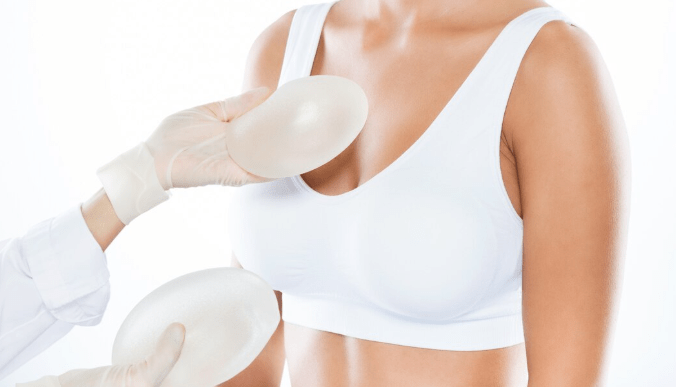
A conversation can be stopped just by the name. surgery with a metal bra. It sounds awkward at best and almost frightening at worst; it’s the kind of phrase that evokes thoughts of inflexible hardware and something that is fundamentally at odds with the notion of refined cosmetics.
However, the procedure it describes has been subtly gaining popularity in plastic surgery practices throughout the United States and abroad, attracting interest from both first-time and experienced women who are essentially asking the same question: how do I make the results last longer? It turns out that the industry’s best solution right now is the metal bra, which isn’t really made of metal at all.
Metal Bra / Internal Bra Surgery — Key Information
| Procedure name | Internal bra technique (also: metal bra, surgical bra, mesh bra, permanent bra surgery) |
| Procedure type | Supplementary surgical technique — not a standalone procedure |
| Primary material | GalaFLEX mesh (P4HB monofilament fiber) — absorbable, not metal |
| Other materials used | Acellular Dermal Matrix (ADM), synthetic mesh, autologous tissue (fascia) |
| Used alongside | Breast lift (mastopexy), augmentation, reduction, implant revision, reconstruction |
| Absorption timeline | 12–24 months (body replaces mesh with collagen and elastin) |
| Recovery time | 4–6 weeks total; minimum 1 week off work |
| Additional cost | $1,000–$3,000 added to primary procedure; total range $3,000–$15,000 |
| Insurance coverage | Generally not covered (cosmetic); reconstruction post-mastectomy may qualify |
| Governing body | American Society of Plastic Surgeons (ASPS) |
| Reference | American Society of Plastic Surgeons — Internal Bra Overview, April 2025 |
The internal bra technique is the official name, and feel rather than material is the reason the metallic moniker endured. During a surgical procedure, a supportive mesh scaffold, usually composed of GalaFLEX, a biocompatible knit fiber, is inserted inside the breast. It is sutured into place at several points to distribute the weight of the breast and withstand the gradual pull of gravity. It sits beneath the tissue like the cups of a push-up bra.
The structured quality of the sensation seems to read as something rigid, something architectural, when patients, especially those with thinner tissue, describe feeling it through the skin in the months following surgery. The term “metal” originated from that encounter rather than anything found in the material’s actual composition.
It’s important to realize that the internal bra is not a procedure in and of itself. On this point, surgeons are generally in agreement. Depending on what the patient’s anatomy actually requires, a board-certified plastic surgeon may use it as an add-on during a breast lift, augmentation, reduction, or implant revision. The majority of patients don’t ask for it by name when they arrive for a consultation.
Usually, they ask a more pragmatic question: how can I maintain the status quo once everything has healed? In contrast to surgical outcomes, gravity is patient, and women who have paid for a breast augmentation or lift are understandably motivated to prolong their investment. By providing the tissue with a secondary structure to lean against while the body performs its own reinforcing work, the internal bra directly addresses that particular issue.
The science underlying its effectiveness is intriguing and somewhat paradoxical. Because the GalaFLEX mesh is absorbable, the body breaks it down into carbon dioxide and water over a period of twelve to twenty-four months. Collagen and elastin, the proteins that give skin its strength and suppleness, are concurrently being laid down by the tissue growing around the mesh. The body has therefore created its own form of structural support in the same spot by the time the artificial scaffold has essentially dissolved. In essence, the mesh just points the body in the proper direction while borrowing time for it to perform its natural functions. Hardware-wise, it’s not permanent, but the effects it creates can last for years.
The expenses are genuine and important to be aware of. Depending on the location, the surgeon’s experience, and the complexity of the procedure, the total cost of a breast procedure can range from $3,000 to $15,000 when an internal bra is added. Cosmetic surgery is rarely covered by health insurance, with the notable exception of breast reconstruction after mastectomy, which has been covered by the Women’s Health and Cancer Rights Act since 1998.
This is a significant out-of-pocket calculation for the majority of patients thinking about getting an internal bra. Surgeons who are honest with their patients will tell them that the procedure isn’t always necessary. Internal bras are not always beneficial for breast surgeries, and it would be unethical to recommend them for all patients, regardless of their anatomy.
Observing this technique’s transition from specialty practices into more general discourse gives the impression that it represents a larger trend in cosmetic surgery, one that looks beyond the immediate outcome and considers what might occur five or ten years later. Sagging and position were frequently addressed as one-time issues in earlier generations of breast surgery. Instead of merely correcting them, the internal bra treats them as persistent conditions that benefit from engineering. That presents a more truthful picture of how bodies function.
After surgery, gravity continues. Growing older doesn’t stop. Unnoticeably, the tissue that was raised last year is already being drawn back down. By incorporating internal bras into their procedures, plastic surgeons are effectively publicly admitting that, something the industry has never been willing to do. It’s still unclear if this will become the norm rather than an option, but it appears to be on course.
