

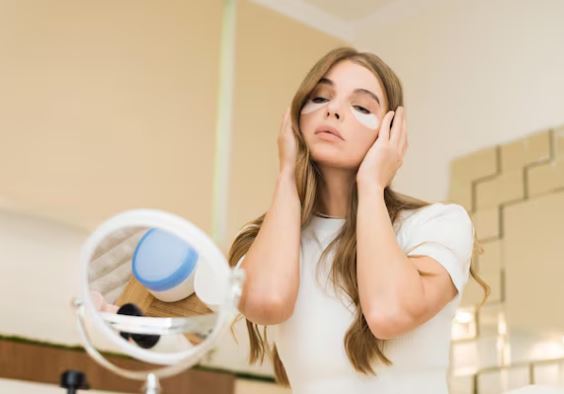
You’ll notice that the waiting area has changed when you walk into practically any dermatology clinic on a weekday afternoon. The faces are younger, but the magazines and cucumber water are the same. People in their mid-twenties are scrolling through their phones, not to solve problems but to avoid them. The term “prejuvenation” has been coined to describe this change, and it’s difficult not to find it both fascinating and unsettling.
The reasoning is not absurd. The substances that keep skin supple, collagen and elastin, begin to gradually decline in your twenties before any symptoms appear. The idea is to treat the skin while it is still healing beautifully, with excellent elasticity and quick turnover. Instead of chasing damage later, encourage it to remodel healthy tissue now. Practitioners believe that early, gentle intervention builds up over time, much like tiny deposits do. To be honest, it’s still unclear if that holds over decades. Long-term prevention science is more recent than the trend.
By design, the treatments themselves are typically mild. The reason Clear + Brilliant is referred to as the “starter laser” is that it produces tiny areas of damage, replaces worn-out skin with new skin, and allows you to return to work the same day. Ultra-short pulses are fired by PicoSure and related pico devices to break up stubborn pigment, early sunspots, and lingering post-acne marks. Instead of using a true laser, IPL uses broad-spectrum light to target redness and damaged capillaries. It’s not the dramatic, peeling, week-in, week-out resurfacing that your aunt may recall. That type is still present, but it is limited to the ablative end of the spectrum and actual scarring.
Everyone glosses over the sunscreen part, so I can’t stop thinking about it. No matter how mild, any laser leaves skin yearning for UV protection. The American Society of Plastic Surgeons and all sincere dermatologists are direct about this: the daily SPF is the foundation, not just a recommendation. If you skip it, you risk undoing the work or, worse, bringing back the pigmentation you were trying to remove. There’s a subtle irony there: if you pay to fade sunspots, the sun will return them if you’re not careful.
More important than the device is the consultation. Not every laser is safe for every complexion, and the incorrect tool can result in hyperpigmentation rather than clarity for deeper skin tones. Good clinics are aware of this and make thoughtful decisions; the cheap med-spa in the strip mall might not. The fact that the demand has outpaced the caution is what makes me hesitate about the movement as a whole. Since a laser is a medical procedure, scheduling one at 25 should feel more like a medical decision than like purchasing a serum.
Before electric cars became popular, Tesla faced skeptics, and skincare has a similar storyline: yesterday’s vanity becomes tomorrow’s routine. Perhaps a smoother forties can be achieved by laser-treating your twenties. Perhaps it’s primarily anxiety, glowing in the right light. As we watch this develop, the reality is most likely somewhere in the middle. In either case, the skin regenerates itself. How much and when we want to push it is the question.
