

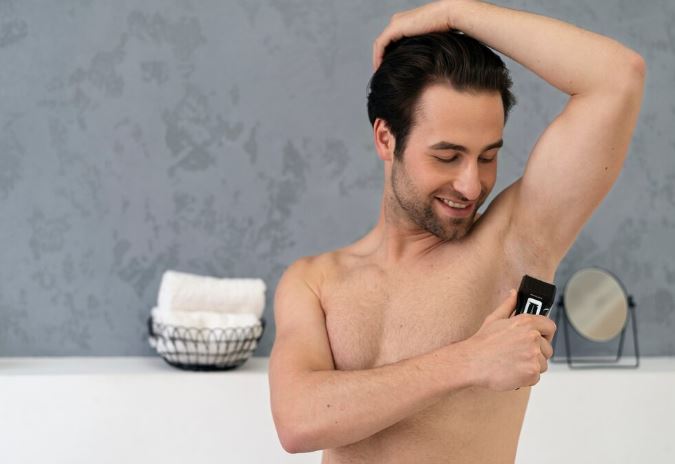
A few years ago, a man might have lowered his voice to confess that he had a standing laser appointment. He now texts the address of the clinic to his friends. Almost everything about the direction of things can be inferred from that slight shift in tone.
When you walk into a medspa on a weekday morning, you’ll notice that the waiting area has changed. A young man is scrolling through videos of someone shaving their own back, an older man is leafing through a magazine, and a man in cycling gear is checking his phone. No one appears ashamed. A man gets up, the receptionist calls a name, and everything seems about as routine as going to the dentist. The truth lies in that ordinariness.
What the room suggests is supported by the numbers. Laser hair removal has risen to the top of the list of male aesthetic treatments, second only to injectables in many clinics, and the men’s grooming market is expected to reach $79 billion this year. The growth may indicate something more subdued than vanity: men finally realizing that upkeep isn’t a feminine luxury. Around the time of the pandemic, when everyone was confined to their homes, staring at themselves on video calls and noticing things, there seems to have been a break in the stigma.
Men’s explanations are seldom poetic. It’s mostly friction, actual friction. The slow tedium of shaving the same area of neck three times a week, razor bumps, and ingrown hairs. Naturally, athletes were early adopters; swimmers and cyclists have always shaved to improve their performance. However, the new group isn’t preparing for anything. All they want is skin that doesn’t hurt and fewer chores. Laser offers a way out of the cycle with its six to ten sessions and promise of long-lasting reduction. You make a single, approximate payment and don’t think about it afterward.
The language people use is more fascinating to me. Instead of calling it a procedure, they now refer to it as a ritual. “Feeling clean,” “starting the week right,” and the appointment itself as a sort of decompression are all mentioned. It’s difficult to ignore how much this resembles how women have described grooming for decades: the salon as a haven, the maintenance as care rather than correction. Perhaps without realizing it, men appropriated the vocabulary.
Opponents will claim that this is marketing disguised as wellness, and they are partially correct. Clinics have every right to present a back wax as a sign of dignity. Nevertheless, the framing appears to be landing because it provides a genuine response. A man who used to feel somewhat guilty about his appearance now has permission—even encouragement—to make an investment in it. It’s still unclear if that’s liberation or just a deftly marketed product. Most likely both.
The treatments themselves continue to proliferate. For the squeamish, sugaring. Cautious trimming. For the dedicated, full laser. Beard-line work for meticulous people. The notion that grooming is limited to taking a shower and using a comb is undermined by each one.
As you watch this happen, you get the impression that the change—not the hair, but the attitude—is irreversible. Men are not returning to shrugging indifference. The clinics are full, appointments are scheduled, and some guy is texting his address once more.
