

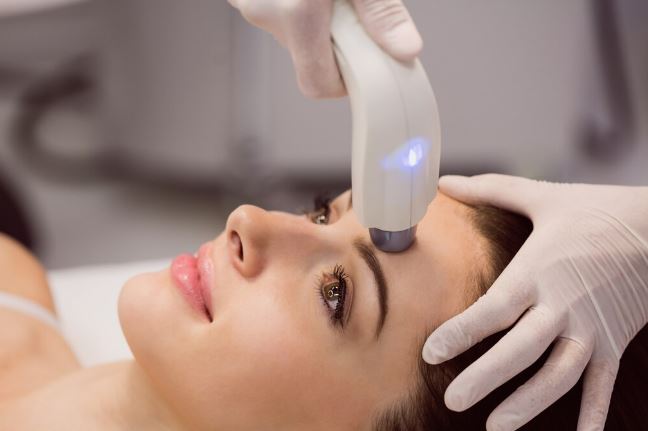
When the goggles come on and the room darkens while you’re sitting in a slightly reclined chair in a dermatology clinic, a small handheld device starts methodically moving across your face with a sound akin to a rubber band snapping against a wooden desk. That’s Broadband Light therapy, or BBL. It hardly receives the cultural attention it most likely merits, even though many people covertly reserve it between lunch breaks and school runs.
BBL has been around for years, operating in that ambiguous middle ground between medical treatment and beauty ritual. It isn’t a laser, technically — and dermatologists are careful to point that out. BBL uses pulses of broad-spectrum light filtered to hit different depths of skin depending on the concern, whereas traditional lasers use a single, focused wavelength to target tissue. For most patients, the difference is less important than the outcomes, which are often subtly impressive following an appropriate course of treatment. Sun damage that has been building up since your twenties begins to show up and flake off. Redness that never quite responded to serums begins to calm.
What makes the treatment genuinely interesting — beyond the aesthetics of it — is what’s happening at the cellular level. The light energy heats the upper layers of skin in a controlled way, stimulating collagen and elastin production, targeting pigmented cells in age spots and acne scars, and constricting the blood vessels responsible for chronic facial redness. According to research, BBL may even affect the expression of specific genes in skin cells, encouraging them to behave more like younger tissue. This could be one of the explanations for practitioners’ reports of cumulative improvements, which indicate that the fourth session typically produces noticeably more than the first.
Recovery is forgiving, at least in contrast to more aggressive procedures. The majority of people resume their regular activities the same day. Seeing the treated pigmentation darken in the days after a session—spots that appeared faint on the skin before treatment suddenly appearing like faint coffee-colored flecks before they slough off naturally—is the one truly unusual aspect of the procedure. It’s disconcerting if you haven’t been warned. Reassuring once you have been. The process typically takes seven to ten days to complete, and picking at the skin during that window is, universally, a bad idea.
Sun protection becomes non-negotiable immediately before and after treatment, and honestly for the long term if results are going to hold. For post-treatment skin, mineral-based sunscreens, such as those containing zinc oxide or titanium dioxide, are typically preferred because they sit on the skin’s surface rather than absorb it, which tends to be gentler during recovery. It’s one of those seemingly straightforward aftercare instructions that, in the opinion of most practitioners, are most commonly disregarded.
Observing BBL’s gradual rise in popularity gives the impression that people’s expectations regarding cosmetic procedures have begun to shift. Right now, dramatic outcomes without dramatic intervention are particularly appealing. Whether the draw is the minimal downtime, the cumulative anti-aging logic, or simply the frustration with creams that never quite deliver — BBL has found a specific and devoted following. It’s still unclear if it will ever become widely discussed in the same way as some other procedures. Nevertheless, the appointment books appear to be filling up in clinics from Dublin to Dallas.
