

A woman in her late twenties is sitting across from an aesthetician in a med spa consultation room in Denver or in a tanning salon that has been converted into a laser clinic in central London, going over her skin history in the same manner that a doctor goes over a patient’s chart. She’s not there to purchase foundation. She is not inquiring about mascara. She wants to know how long collagen stimulation takes and if traditional microneedling or radiofrequency microneedling is better for her skin type. Her grandmother would not have recognized the conversation. The women of ancient Egypt, who lined their eyes with soot-blackened kohl to protect themselves from the desert sun and, according to some stories, ward off evil spirits, would have found it totally foreign. However, the impulse that unites them all is the same: the desire to look well on purpose, in whatever way their time allowed.
Beauty has a longer and more bizarre history than the beauty industry usually promotes. Around 4000 BC, a mixture of galena, soot, and animal fat was applied around the eyes of both men and women in the Nile Valley for reasons that were equally spiritual, cosmetic, and utilitarian. This is where it all began, not at a department store counter. Finely ground rice powder was used by ancient Chinese empresses to create a flawless, pale complexion that denoted nobility. The same pale ideal was pursued by women in medieval Europe using far riskier means, such as lead-based powders, arsenic preparations, and substances that gradually poisoned those who wore them. Beauty’s logic has never been totally logical. At least that part hasn’t changed.
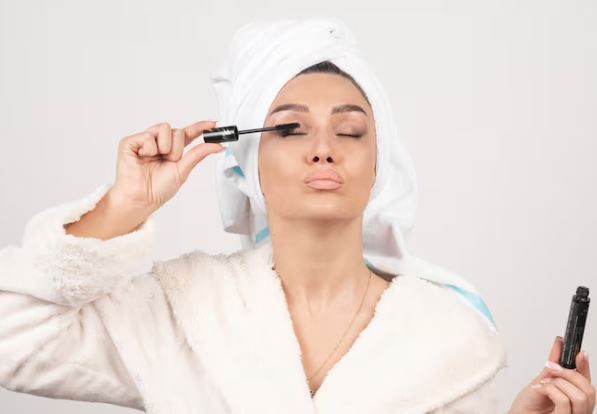
The mascara moment is intriguing because it seems like the start of something familiar. A chemist by the name of Thomas Williams developed a crude lash-darkening product for his sister Mabel in 1913. This act of brotherly problem-solving led to the eventual creation of Maybelline. By the 1950s, Hollywood had made makeup into a sort of cultural uniform, complete with voluminous lashes, bold lips, and arched brows that needed to be created every day before the public could see it. For the majority of the 20th century, beauty was additive. To make yourself look better, you put things on top of yourself. The skin beneath was merely incidental.
The shift toward microneedling and the more general category of treatments that operate beneath the surface rather than on top of it occurred gradually, and it may still be in progress. In the 1990s, plastic surgeons in South Africa and Canada observed that controlled needle punctures seemed to improve the texture of wrinkles and scars by activating the skin’s natural healing processes. This observation led to the development of the technique itself. When motorized devices made the procedure accessible outside of operating rooms in the 2000s and 2010s, what had begun as a surgical curiosity evolved into a comprehensive anti-aging protocol. The reasoning is nearly the opposite of that of the mascara era: instead of covering the skin, you’re encouraging it to regenerate itself from the inside out, causing collagen production to peak weeks after the treatment session.
The “skin-first” aesthetic seems to be doing something more intriguing than just switching out one set of products for another. It illustrates a different perspective on time. When you wear a lot of makeup, your appearance changes as soon as you leave the bathroom. Patience, preparation, and a certain amount of faith in biological processes that are invisible during the procedure are all necessary for microneedling. To allow collagen stimulation to peak at the ideal time, bridal beauty timelines now typically begin nine to twelve months before a wedding, with laser hair removal starting first, followed by corrective treatments, microneedling sessions spaced four to six weeks apart, and the final one completed six to eight weeks before the event. This isn’t impulsive vanity. Project management is nothing more than conceit.
However, it is not a rejection of the long-standing tradition of surface pleasure in beauty. On the modern woman’s beauty list, lash lifts and brow lamination—semi-permanent procedures that improve what’s already there without the daily tube of mascara—fit in nicely with microneedling. The mascara hasn’t disappeared. Simply put, you can’t do everything by yourself anymore. Beauty has evolved over the past 6,000 years from a sacred ritual, a social signal, a daily performance, and now it more closely resembles a long-term investment in the skin you’ll be wearing for the next few decades. Depending on your point of view, that may or may not be progress. It is significantly less arsenic, at the very least.
