

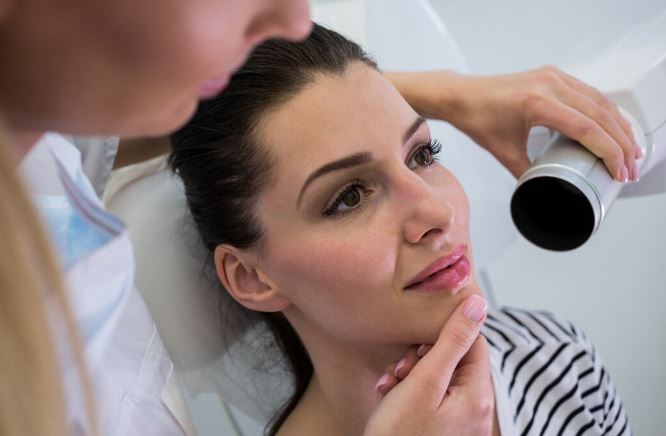
The feeling that follows a successful HydraFacial is so unique that almost everyone who gets one for the first time tends to feel the same way. It’s the cleanest the skin has felt in months. It has a distinct brightness, not the fleeting flush of a standard facial, but something that appears differently in a mirror: the texture is more even, the pores are noticeably clearer, and the face appears to have slept. The subsequent impulse is clear-cut and instantaneous. When will I be able to do this once more?
For the majority of people, the answer is in four to six weeks. And it has more to do with biology than with commercial recommendations. Human skin renews itself every 28 to 40 days, with new cells starting at the base of the epidermis and progressively moving upward before shedding. When used in conjunction with this cycle, the HydraFacial—a three-step procedure that deeply cleanses, extracts impurities, and infuses the skin with targeted serums—works best. By scheduling a session approximately once a month, each treatment is applied to a skin surface that has actually finished a renewal cycle since the previous one, enabling the exfoliation and hydration components to fully function without interfering with an ongoing cycle.
| Topic | HydraFacial Maintenance: How Often Is Too Often |
| Standard Maintenance | Every 4–6 weeks — aligns with the skin’s natural cell renewal cycle of 28–40 days; most widely recommended frequency for general maintenance and glow |
| Acne / Oily Skin | Every 2–3 weeks initially for a short corrective series (typically 4–6 sessions) to regulate sebum and clear congestion, then stepping back to monthly maintenance |
| Dry / Sensitive Skin | Every 6–8 weeks, the gentler cadence reduces irritation risk and allows the skin barrier to recover fully between sessions |
| Pre-Event Timing | 3–7 days before a significant event — allows temporary redness to settle while preserving the glow; not a substitute for a regular treatment schedule |
| When It Becomes Too Much | More than once every two weeks for most skin types; signs include increased redness, excessive dryness or tightness, irritation, unexpected breakouts — all indicators of a compromised skin barrier |
| Seasonal Adjustment | Winter: monthly sessions counter cold-weather dryness. Summer: more frequent may address sun-related congestion. Autumn/Spring: ideal for skin resets between harsh seasons |
| Reference | Harley Street Skin Clinic — How Often Should You Get a HydraFacial? (harleystreetskinclinic.com) |
The design of the treatment itself is truly remarkable. HydraFacial uses a vortex-based device to simultaneously remove dead skin and debris and deliver serums—antioxidants, peptides, and hyaluronic acid—at a depth that topical application from a jar at home cannot match, while traditional facials rely on manual extraction and surface-level products. It has no downtime, which contributes to its widespread appeal, and the outcomes are apparent right away. Overuse is also tempting because of this. When a treatment improves the appearance of the skin within an hour, it may seem logical to apply it more frequently. However, once you realize what happens when exfoliation is used excessively, that reasoning falls apart.
The body’s first line of defense against bacteria, environmental stressors, and moisture loss is the skin barrier, a layered structure of cells and lipids. By removing dead cells that would otherwise build up and dull the surface, regular, timely exfoliation promotes barrier health. Exfoliating too often, before the skin has had time to heal, starts removing the functional layer beneath the dead layer as well. Increased sensitivity, skin that feels tight or dry despite hydration, unexpected redness, and breakouts that seem contradictory in the context of a cleansing treatment are specific and uncomfortable indicators that this is taking place. These all point to a weakened barrier rather than skin that requires further care. There are signs that it requires less.
At the very least, the majority of practitioners draw the line once every two weeks, and even that frequency is usually set aside for particular corrective courses rather than continuous maintenance. In order to improve skin regulation, clients with oily or acne-prone skin who experience frequent breakouts, excessive sebum production, or persistent congestion may be advised to start with a brief, intensive series of treatments every two to three weeks, usually four to six sessions. The schedule returns to monthly maintenance after that series. The intense frequency is not a permanent cadence; rather, it is a period of correction. The issues arise when it is treated as the latter.
On the opposite end of the spectrum are dry and sensitive skin. The standard four-to-six-week recommendation may still be too frequent for these skin types; a more thoughtful interval is every six to eight weeks. The exfoliation component is the variable that needs to be controlled, but the hydrating components of the treatment are actually effective for dry skin. Longer recovery intervals between sessions are necessary for skin that already leans toward sensitivity, and pushing through those intervals results in diminishing returns or active irritation rather than ongoing improvement.
This has a seasonal component that isn’t always covered. The cold of winter and central heating cause dryness and dullness in the skin, which can be effectively countered with monthly sessions. Some people may need to visit a little more frequently during the summer due to the increased oil production and UV exposure, especially those who are dealing with traffic. Practitioners frequently say that autumn and spring are the best times for a skin reset because they can address the dehydration from a long winter or the accumulated damage from summer sun. It makes more sense to modify the HydraFacial schedule to account for these seasonal variations rather than adhering strictly to the same interval all year long.
It’s difficult to ignore the fact that demand for this treatment has increased significantly over the last few years, in part due to social media visibility and in part because it actually produces results that people can see and feel the same day. Because there is no obvious recovery period to deter making another appointment too soon, the combination of instant satisfaction and no downtime creates the conditions for overconsumption in a way that more intensive treatments do not. Over-treating with a laser or peel has immediate visible effects on the skin. Because the effects of too many HydraFacials build up more subtly, practitioners’ advice always reverts to the same rhythm: once a month, in line with the skin’s natural renewal process, is the schedule that results in long-lasting improvement rather than a diminishing cycle of treatment and reaction.
