

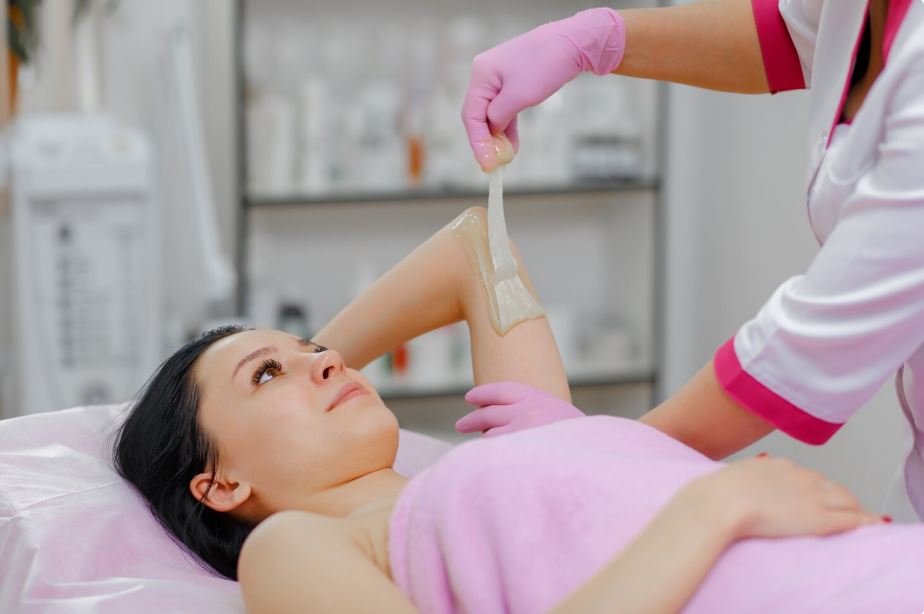
It begins as a beauty routine, a last-minute fix before social events or holidays. The smooth-surface, fresh-skin confidence that people come to rely on is provided by waxing. However, the skin is not always unaltered when the habit persists for years.
The skin gradually ages as a result of frequent waxing. The strip is pulling at the structure of the skin with each pull, not just lifting hair. It seems like a quick, even effective process. However, beneath the surface, it’s causing microtears, removing natural oils, and occasionally inducing hyperpigmentation.
| No surface trauma; target follicle beneath skin | Waxing (Long-Term Effects) | Laser Hair Removal (Long-Term Benefits) |
|---|---|---|
| Skin Trauma | Regular surface damage, inflammation, micro-tears | No surface trauma; targets follicle beneath skin |
| Ingrown Hairs | Frequent, painful, may cause scarring | Significantly reduced or eliminated over time |
| Skin Tone | Prone to dark spots and uneven pigmentation | Gradually evens skin tone and texture |
| Elasticity & Aging | Reduced elasticity from repeated pulling | Preserves firmness; no tugging |
| Comfort | Painful during and after; sensitive to touch | Mild discomfort; improved comfort after sessions |
| Cost Over Time | Monthly expenses continue indefinitely | Higher upfront; fewer sessions over time |
| Maintenance | Frequent appointments necessary | Occasional touch-ups after initial series |
| Impact on Sensitive Areas | High irritation in bikini/underarms | Notably gentler and safer for delicate regions |
The skin gradually begins to whisper that it has had enough. After ten years of waxing, a friend once admitted that her underarms were always “tired.” Overly sensitive, but not in a dramatic way, as if they were always recovering. The ritual had become second nature to her, but the subsequent dull ache had not. The dark spots, the redness that resembled a razor burn, the lumps that never quite went away.
These symptoms are normal. They serve as silent warning signs of ongoing inflammation. Waxing causes the follicle and surrounding tissue to be disturbed, tearing hair from the root. For people with coarser or curlier hair, this disruption can frequently result in ingrown hairs, which are tiny, troublesome curls that irritate the skin and occasionally leave permanent marks.
In particular, skin color conveys a more delicate message. Melanin-rich skin responds to trauma more quickly. A pigment response can be triggered by even mild inflammation, resulting in spots that persist long after the irritation has subsided. What starts as transient redness can turn into an uneven tone that is difficult to conceal and treat.
Here’s where laser hair removal subtly changes the story.
In contrast to waxing, lasers do not interact with the skin’s surface. It targets the melanin inside the hair follicle with concentrated light, eliminating it at its root without causing any damage to the surrounding skin, as opposed to tearing or pulling. Finer, slower regrowth is the outcome of this process over several sessions. Many times, the follicles eventually cease to produce any hair at all.
Finally freed from the cycle of trauma, the skin starts to heal itself.
It was while visiting a boutique laser clinic that I observed this change for myself. After switching from waxing, a client reported that her bikini line, which had previously been scarred by persistent irritation, had both lightened in tone and smoothed out. She was just looking for relief, not perfection. She received that from Laser, one session at a time.
Not because it was dramatic, but because it was so commonplace, that moment stuck with me. Where there had been unease, there was now a quiet confidence.
Though it is much easier to handle, a laser isn’t painless for those who are worried about it. Most people describe it as a quick snapping sensation that isn’t as intense as waxing, especially since modern machines now have cooling systems. The best part, too? Skin damage does not accompany the discomfort.
Sessions are spaced out, typically occurring every 4–6 weeks, and each treatment builds on the one before it. After only two or three visits, many people start to see results. Ingrown hairs grow out. The skin’s texture evens out. The intervals between appointments lengthen.
Furthermore, laser technology has become extremely versatile, which is particularly innovative. Safety concerns that previously restricted access are addressed by devices like the Nd: YAG laser, which are made especially for darker skin tones. Lasers are now safer and more effective for a greater variety of skin types when properly calibrated and handled by qualified professionals.
When it comes to long-term care, lasers become more about skin health than aesthetics.
A cost narrative is also worth discussing. Long-term, lasers are incredibly efficient, despite their initial high cost. Consider it this way: waxing appointments per month grow quickly. The cost increases when you include post-care items, time away from work, and the psychological impact of persistent irritation. Laser, on the other hand, usually takes six to eight sessions, with periodic maintenance afterward. Within two years, many clients break even, and some never go back to hair removal at all.
The move to laser treatment may have more than just cosmetic implications for people with sensitive skin or long-term skin disorders like folliculitis or Hidradenitis Suppurativa. It’s a way to find relief. By removing the need for repeated trauma, laser therapy helps irritated skin to calm down, preventing flare-ups and allowing skin to heal naturally.
I recall thinking that laser wasn’t just smoother—it was kinder after talking to a woman who had battled excruciating ingrowns on her thighs for years.
Convenience is the more general advantage. No more letting your hair fall out in front of meetings. Stop rushing to reschedule around regrowth. With a laser, you can shave in between treatments and arrive prepared—no waiting, no hiding, and no preparation.
For many people, waxing still serves a purpose. But a more forward-thinking option is provided by laser. One that respects the skin’s natural equilibrium rather than constantly upsetting it.
Progress rather than perfection is the promise. Lighter, more liberated skin that isn’t preparing for the next session. For those who are prepared to break free from the cycle of band-aid solutions, laser treatment transforms not just hair but also your skin’s self-perception.
