

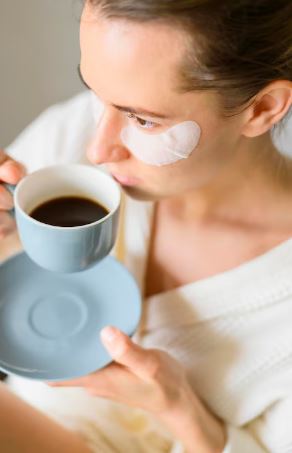
Nobody really discusses the little ritual that takes place in injectable clinic waiting rooms. The receptionist mentioned, almost as an afterthought, that caffeine isn’t ideal before treatment, so someone walks in holding an iced coffee and finishes it in the lobby. It’s a brief moment. However, it alludes to something more significant that practitioners have been observing for some time—quietly, almost reluctantly, as if no one wants to be the one to ruin everyone’s morning ritual.
To be precise, the mechanism is not mysterious. Dehydrated tissue reacts differently to a needle than well-hydrated tissue, and caffeine acts as a mild diuretic by drawing water out of the body. This may be the reason why some practitioners now discuss timing caffeine almost as frequently as they discuss abstaining from alcohol. Slightly dehydrated skin swells differently, bruises more readily, and might not retain filler volume as well as a hydrated face. This is not dramatic at all. It’s a subtle, cumulative phenomenon that manifests itself in results rather than headlines.
Additionally, there is the cortisol piece, which continues to be discussed despite feeling less conclusive from a scientific standpoint. Cortisol has a complex relationship with collagen, oil production, and inflammation, and caffeine stimulates the body’s stress hormone. Observing this debate on the internet, primarily through dermatologists sharing brief videos dissecting “the truth” about coffee and skin, reveals a clear pattern: most experts fall somewhere in the middle rather than categorically labeling coffee as a villain.
The fact that the same compound is both credited and blamed at the same time is almost comical in a subtle way. Polyphenols, plant-based antioxidants found in coffee, may actually strengthen rather than weaken the skin barrier, according to some researchers. Thus, the morning cup isn’t just harmful. It’s intricate, multi-layered, and full of conflicting effects that largely depend on the amount of alcohol consumed, the ingredients added, and the individual’s overall level of hydration. When two glasses of water are consumed with a black coffee, the body reacts very differently than when four sugary lattes are consumed consecutively without any water.
This conflict reflects a common issue in skincare more generally: the discrepancy between the messier biological reality and a marketing-friendly verdict. A clear yes or no is what people want. Is coffee good or bad? The truthful response continues to be uncooperative. Practitioners seem to be handling this delicately, not wanting to frighten clients needlessly but also not wanting to overlook a pattern they have personally observed in bruising and swelling following treatments.
It remains to be seen if the larger skincare sector will eventually adopt strict guidelines in this regard. As of right now, what’s emerging seems more like cautious common sense than strict guidelines: don’t show up to a filler session after three espressos and four hours of sleep, drink more water than usual, and cut back the day before an appointment. Little changes that are simple to ignore but seem significant enough to have an impact at the margins, which is frequently where results in cosmetic medicine are determined.
