

A laser clinic’s waiting area smells slightly of antiseptic, and something faintly singed; it’s not quite disagreeable, but it’s distinct enough to make an impression. Those who have gone through the process are aware of it. When someone is going through it for the first time, they typically try not to think too much about what could cause it. It turns out that the laser uses enough energy to break down ink beneath the skin, sometimes singeing tiny surface hairs. It’s a reasonable place to start, and the least frightening aspect of the experience.
Due in part to more recent Picosecond laser technology, which has made removal quicker and more efficient than previous systems, laser tattoo removal has become a major industry. Allure has written extensively about the procedure’s growing adoption. On national television, comedian Pete Davidson, who accumulated about 200 tattoos over the years, called the removal procedure “horrible.” Given the quantity and density of tattoos involved, this is an honest but possibly unhelpful context. The experience is different in degree but not completely in kind for most people who remove something that is more akin to a single, palm-sized piece.
| Topic | Tattoo Removal Sessions: What It Actually Feels Like, Minute by Minute |
| Technology Used | Q-switched and Picosecond lasers; Picosecond uses ultra-short, high-intensity pulses to fragment ink particles without damaging surrounding tissue — generally considered more effective and less painful than older systems |
| Session Duration | Active laser time typically 30 seconds to 2 minutes for small-to-medium tattoos; total appointment including prep and aftercare usually 15–30 minutes |
| How It’s Described | Most commonly: a rubber band snapping against skin, hot bacon grease spattering, a sharp sunburn sting. Pain rated 3–8 out of 10; 84% of patients report moderate to extreme discomfort during pulses |
| What “Frosting” Is | Immediate whitening of treated skin caused by CO₂ gas released as laser energy shatters ink particles — normal, temporary, settles within 20–30 minutes |
| Pain Variables | Active laser time typically 30 seconds to 2 minutes for small-to-medium tattoos; total appointment including prep and aftercare, usually 15–30 minutes |
| Cooling Methods | Zimmer cryo cooling device (blows air at approximately -30°C) applied during laser pulses; ice packs before and after; topical numbing cream applied 45–60 minutes prior (reduces but does not eliminate sensation) |
| Post-Session Experience | Skin feels like severe sunburn for hours to 2–3 days; blistering possible; antibiotic ointment and bandaging applied; area should be kept dry for 24 hours; ice recommended every hour initially |
| Reference | Removery — What Does Laser Tattoo Removal Feel Like? (removery.com) |
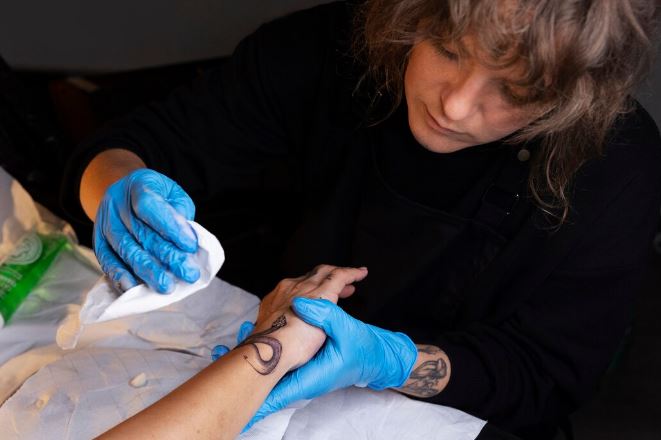
Cleaning is the first task of the session. In order to remove any oils from the skin’s surface and create a clean surface for the laser to work against, a technician swabs the tattoo area with alcohol. Next is the Zimmer cryo device, which blows air onto the treatment area at about -30°C. The shock of the cold is followed by a profound numbness. To lessen the amount of pain that is actually felt, clinics use it both before and during the laser pulses. Another option is topical numbing cream, which is usually applied 45 to 60 minutes prior to the appointment. However, most practitioners are direct in pointing out that it lessens rather than eliminates the sensation. For larger pieces, some clinics provide numbing injections.
Before starting the full pass, the technician typically performs a test pulse, which is a single laser hit on a small area. At this point, the majority of new patients grasp the description of “a rubber band snapping against your skin” in a concrete way. As far as it goes, it’s accurate. The heat component is what it fails to adequately convey. The pulse is physiologically distinct from a rubber band snapping in the cold because it is hot and sharp, arriving nearly simultaneously. More vivid alternatives are offered by Reddit users who frequent the tattoo removal community, such as the sensation of hot welding slag landing on your arm or hot bacon grease splattering against skin, according to one particularly evocative commenter. After describing how it feels at the time, the majority of them finally settle on the word “doable.”
The actual laser passes occur rapidly. The active treatment period for a small-to-medium tattoo typically ranges from 30 seconds to two minutes. The pulses fire at regular intervals as the technician makes methodical passes with the handpiece across the tattoo. The CO2 gas released when the laser energy breaks up the ink particles causes the ink to turn white as each area is struck, a phenomenon known as frosting. It has occasionally been described as having a “blue cheese texture” in both texture and appearance, and it appears somewhat frightening, as if the skin has been scorched to a pale, puffy surface. As the gas disperses, it usually goes away in twenty to thirty minutes and is completely normal. It’s also important to be aware of the session’s auditory component beforehand. Each pulse produces a slight popping sound, which some people find more unsettling psychologically than the actual sensation. One particular kind of strange sound is the sound of your own skin doing something.
When the laser stops, the nature of the pain changes. A deep, spreading burn that is similar to a severe sunburn but concentrated on the treated area takes the place of the sharp snap quality almost instantly. Either the cryo machine runs continuously, or ice is immediately applied. The area is bandaged, an antibiotic ointment is applied to prevent infection, and the technician goes over aftercare instructions, which include keeping the area dry for 24 hours, applying aloe or ointment as directed, avoiding direct sunlight, and icing it frequently over the first few days if blistering develops. Blistering is a common reaction of the skin to the broken ink and is not a problem. “It looked like a bad sunburn for a few days, and then it was fine,” is a fairly typical account from those who have experienced the procedure. For some people, the days that follow are easier to handle than the actual session. Others flip the order.
An hour after leaving the clinic, sitting with the treated area still warm and slightly stiff, you get the impression that the discomfort was more manageable than you expected and more genuine than the carefully worded descriptions had prepared you for. Usually, both of these statements are accurate. The process is uncomfortable. For the majority of tattoos, it is also fairly short. With ice and realistic expectations, the recuperation is doable. Additionally, the scent in the waiting area is precisely what you think it is—a faint, singed note—and it quickly goes away. The majority of the experience does.
