

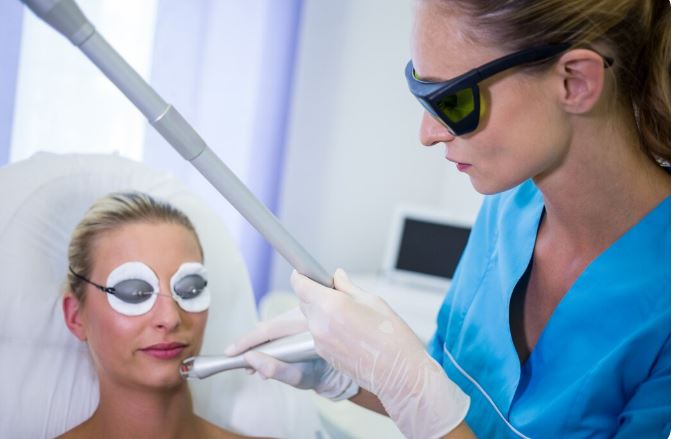
There’s a certain point in time, difficult to pinpoint exactly but easily identifiable in hindsight, when a beauty appointment ceases to feel like a chore and begins to feel like something you genuinely want. Not in the opulent sense of a spa day, but in a more subdued and useful way: you stop dreading the appointment and begin to notice how much more mental space becomes available when a persistent irritation stops happening. People from all demographics and grooming contexts are increasingly reporting that this is the point at which laser treatment transcends beauty maintenance and becomes something more truly beneficial.
The distinction is important because, despite their frequent interchangeability in wellness marketing, maintenance and self-care are not the same thing. Because the alternative (stubble, irritation, and the same waxing appointment every four weeks with its predictable bruising and regrowth cycle) is worse than the doing, maintenance is reactive. Taking care of oneself is proactive. Instead of managing a load, it lessens it. The cost of the treatment or the clinic’s appearance doesn’t make a difference. It all comes down to whether scheduling the appointment gives you a sense of control over your life or just makes you feel a little less behind on your grooming checklist.
| Topic | When Laser Becomes Self-Care Instead of Beauty Maintenance |
| The Core Shift | Laser treatments move from beauty obligation to self-care when they transition from a stress-producing recurring chore into a proactive, empowering routine that delivers long-term emotional and physical benefit — reducing cognitive load and grooming anxiety rather than simply managing appearance |
| Market Context | Global laser hair removal market projected to grow from approximately $1 billion (2023) to $7.7 billion by 2035 (CAGR ~18.3%); growth driven by technology improvements, inclusivity expansion, and shifting consumer mindset from temporary maintenance to long-term investment |
| Key Distinctions | Maintenance = temporary, surface-level, recurring (shaving, waxing); Self-care = structural, root-cause, long-term reduction; the shift occurs when the treatment removes a recurring stressor rather than simply delaying the next appointment |
| Mental Health Dimension | Confidence improvements from addressing persistent skin concerns (acne scars, ingrown hairs, texture); stress reduction from eliminating relentless grooming cycles; the clinic appointment becoming “me time” rather than a reactive last-minute errand |
| Preventative Skin Health | Laser treatments move from beauty obligation to self-care when they transition from a stress-producing, recurring chore into a proactive, empowering routine that delivers long-term emotional and physical benefit — reducing cognitive load and grooming anxiety rather than simply managing appearance |
| Reference | SpaFinder — Laser Hair Removal: A Smoother Path to Effortless Self-Care (spafinder.com) |
In particular, laser hair removal has emerged as a valuable case study for understanding how a clinical procedure can cross this cultural boundary. It occupied a niche for a large portion of its early history; it was seen as a high-end beauty service mainly for women with particular hair-to-skin-tone profiles, reasonably priced, and reasonably effective. The worldwide market now presents a different picture. According to industry estimates, it will increase from roughly $1 billion in 2023 to $7.7 billion by 2035. This rate of growth cannot be solely attributed to vanity. People who study consumer behavior in aesthetics believe that a fundamental change in how patients classify the cost is what is causing it. A beautiful result is not what they are paying for. They are repurchasing time. The release from a weekly or monthly schedule that involved eating for twenty minutes here, spending an afternoon in a salon there, and creating something transient, no matter how much work was put in.
“High-maintenance to be low-maintenance” is a phrase that frequently appears in clinic consultations and online beauty forums. It refers to the counterintuitive idea of doing something intensive up front to lessen the ongoing cognitive and physical load. Because it’s true, it resonates. After completing a laser hair removal course, the concept of grooming is not eliminated. The relentlessness of it—the constant need to replace a razor, reschedule a waxing appointment, and deal with ingrown hairs—is being eliminated. When a laser is used effectively, it offers a structural solution to a surface issue. Furthermore, structural solutions are by definition more manageable than ongoing interventions.
This has a mental health component that should be given more consideration than it usually is. Clinics typically take the lead with session counts and before-and-after photos. The anxiety reduction that results from just not having to think about something anymore is something they are less likely to express. Long-term dermatologists and aestheticians consistently report that the improvement in confidence following a successful laser treatment isn’t mainly cosmetic; rather, it’s the elimination of a low-grade obsession that had been lurking in the background. When a hair removal cycle ends, the person who spent years controlling razor bumps around their jaw, organizing vacation attire based on how their skin appeared after the last wax, or scheduling beach vacations around a hair removal cycle experiences something more than aesthetic improvement. A sort of quiet exhale occurs. released focus that could be put to better use.
The shift from maintenance to self-care also applies to skin rejuvenating lasers, such as CO2 treatments, fractional resurfacing, and BBL, which operate within a slightly different framework. People in their thirties and forties are increasingly scheduling these treatments proactively to preserve skin resilience before the obvious signs of aging necessitate more intensive intervention. Previously, these treatments were used reactively to address damage already done (sun spots, post-acne scarring, significant texture). Patients who are investing in skin structure rather than responding to a problem are increasingly requesting preventative CO2 sessions, according to London’s medical aesthetic clinics. The conceptual framework is more akin to the gym than the dermatologist’s office: you visit the gym because tissue maintenance is more effective than healing, not because something is wrong.
It’s difficult to ignore the fact that this change is occurring at the same time that laser technology is becoming more accessible. Alexandrite, Diode, and Nd: YAG multi-wavelength systems now safely and effectively treat a much wider range of skin tones than previous generations of devices, which posed a serious risk for darker skin and could only effectively serve a small percentage of the population. The demographics of who schedules laser treatments and why have expanded as more people have access to the treatment and as improved cooling technology makes the clinical experience more comfortable. It is no longer a specialized high-end service. It’s evolving into a wellness tool, booked for its savings rather than its signals. The purpose of the appointment is not to look a certain way. It’s about managing one less thing. That is a completely different kind of treatment.
