

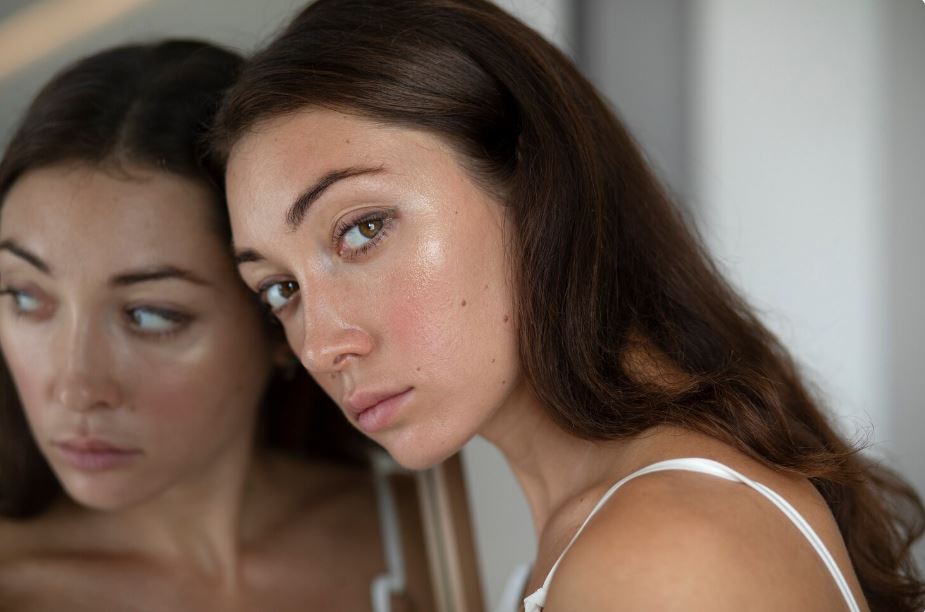
Usually, it starts with a glance in the mirror or an unintentional picture. A shadow under your eye that wasn’t there the previous season, a darker dot on your cheekbone, or a slightly bigger patch close to your hairline. When our skin becomes visible, we often become aware of its memory.
For years, my attention was solely focused on freckles. Those gentle, dispersed dots that glowed in the sunlight and withdrew when fall came. They never caused me any trouble or effort. They were just me. Actually, they seemed almost endearing, like seasonal visitors, because of their disappearance in the winter. However, new visitors eventually arrived and stayed.
| Feature | Freckles | Sunspots | General Pigmentation |
|---|---|---|---|
| Root Cause | Genetic predisposition + sun exposure | Cumulative UV damage over time | Hormonal changes, inflammation, or trauma |
| When They Appear | Early childhood | Typically after age 40 | Any age |
| Appearance | Small, soft-edged, light brown spots | Larger, darker, sharply defined patches | Variable – from small dots to large areas |
| Behavior | Fade in winter, darken in summer | Permanent, may deepen with sun | Often stubborn and slow to fade |
| Health Risk | Harmless, but a sign of sun sensitivity | Harmless but linked to long-term sun use | Typically harmless, but needs monitoring |
| Treatment | Often none – fades naturally | May respond to laser, IPL, or peels | Typically, after age 40 |
Sunspots don’t follow seasonal rules like freckles do. After using SPF diligently for a few weeks, they don’t fade in the cooler months. They are frequently long-lasting scars from sun exposure, the kind that build up over time and then subtly become ingrained in your skin. Additionally, they have a noticeable visual weight even though they are usually harmless. They’re obviously not the freckles of youth, not because they’re dramatic.
The fact that people frequently mistake one for the other complicates matters. Many times, freckles are mistaken for sunspots, and vice versa. I once heard from a dermatologist that sunspots are the result of years of UV exposure. I was affected by that. They are records, not warnings, but records nonetheless.
Then there is pigmentation, a catch-all term that is nearly useless. It encompasses freckles and sunspots, but also melasma, post-acne marks, and the dark patches caused by irritation or burns. Hormonal changes, inflammation, and even friction from masks or glasses are some of the causes. However, the outcome is always the same: the skin darkens stubbornly, unevenly, and unpredictably.
Specifically, melasma has its own rhythm. It frequently blooms like a gentle shadow across the forehead and cheeks and defies common strategies. Naturally, sunscreen is beneficial, but if estrogen is in control, even religious application is limited. Melasma often appears for the first time in pregnant women or after beginning hormonal birth control. It also doesn’t appear as a light dusting, unlike freckles. It settles. It remains.
This has a texture of emotion. It can be unsettling to see patterns in your skin that you didn’t ask for. Not because it hurts, but because it keeps happening. A freckle appears and disappears. The pigmentation persists. It is resistant to serums. It lasts longer than makeup. It is incorporated into your daily computation.
A patch on my jawline that had darkened over the previous year caught my attention one morning. It appeared sharper all of a sudden, as if it had been underlining itself in slow motion, even though I hadn’t noticed it before. It felt like a line was crossed, but it wasn’t dramatic. Additionally, I noticed that I was reading ingredient labels for terms like “tranexamic acid” and “niacinamide” for the first time without the need for a translation.
I was immediately struck by how inadequately we are taught to interpret the language of our skin. We assume damage when we see pigment. We assume fading when we see light spots. However, there is a great deal of variation between different types, and nobody truly explains it. Not the glossy advertisements that promise “spotless skin.” The product packaging does not make a big deal out of brightening complexes.
Most of the time, freckles are just the result of a genetic switch that has been flipped by exposure to the sun. They appear early—often before you even understand what SPF is—and are more prevalent in people with lighter skin, especially those with red or blonde hair. However, freckles go away. They don’t last forever. They function as tiny sensors, alerting you when your skin has received enough sunlight.
On the other hand, ignoring those sensors results in sunspots. They come with exposure, age, and time. They are more substantial, have deeper hues, and are frequently more difficult to conceal. They are not affected by the seasons like freckles are. Additionally, they may feel like a sentence for time already completed.
Inflammation-related pigmentation feels more like fallout. It’s what’s left over after bites, burns, or acne. All skin tones are affected, but deeper complexions are affected more persistently. The frequency with which this kind of pigmentation is misdiagnosed or underestimated is especially annoying. The skin is attempting to defend itself following trauma, so it’s more than just a cosmetic problem.
Of course, there are remedies. Prescription creams, lasers, and peels. Many are remarkably successful, particularly when the root cause is addressed. However, if you don’t know what you’re treating, no treatment will be effective. That’s the gap, which is more about marketing than medicine.
Her freckles were once described as “sun tattoos” by a friend. That pleased me. However, not every pigment is ornamental. A portion of it is defensive. Disorganized healing accounts for a portion of it. Additionally, your skin is subtly pleading with you to take it seriously.
Though slow to forgive, skin remembers how to heal, which is encouraging. It can gradually soften the edges of what sunlight and time have written if it is given the proper support, patience, and protection. The shift is not abrupt. However, it does occur.
I now consider my spots to be margins to edit rather than defects to be fixed. It is possible to lighten some. Others were able to manage. And I’ve decided to keep a few. They remind me of my past locations. They assist me in determining how I want to appear in the sun going forward.
